The 2026 Branding Audit: Why AI Logos Fail and Human Strategy Wins
The Hidden Cost of Instant AI Branding
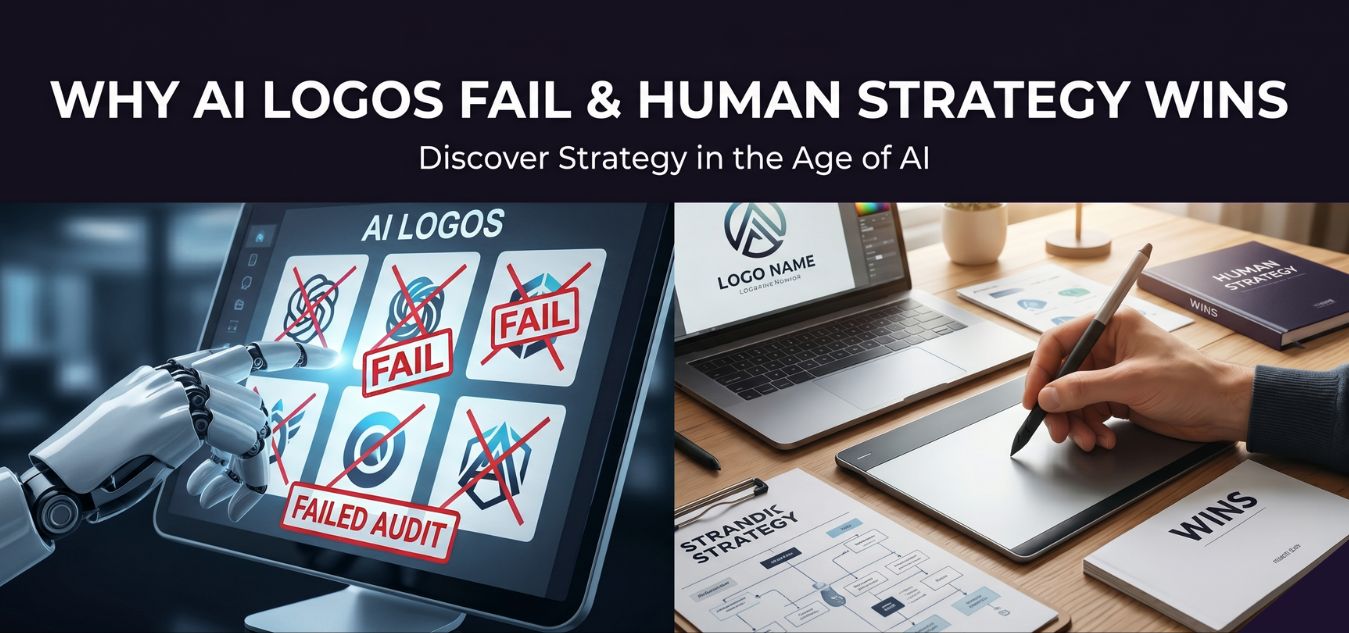
The year 2026 has brought incredible advancements in generative technology. Founders can now type a quick prompt and receive a colorful logo in seconds.
However, a logo is not a brand strategy. It is merely a visual marker.
Over the past nine years of navigating the digital design industry, the shift has been abundantly clear. Businesses that rely solely on automated generators are quickly hitting a revenue ceiling.
In this comprehensive guide, we will explore why human-led strategy remains the ultimate competitive advantage.
The Illusion of the Instant Brand

AI tools are excellent for rapid brainstorming and creating initial mood boards. They can generate a sleek icon or a trendy color palette almost instantly.
But these systems lack business context, market awareness, and audience empathy. An algorithm does not know your competitor’s weak spots.
When you skip the human strategy phase, your visual identity becomes generic. Here is why an automated logo ultimately fails a growing B2B business:
- Zero Trademark Safety: Generated art is legally complex and incredibly difficult to protect or copyright.
- Lack of Scalability: A flat AI image often doesn’t translate well to complex UI/UX components or high-fidelity motion graphics.
- Missing Brand Voice: It cannot align visually with your unique corporate messaging or core values.
- The “Template” Look: Your clients can tell when a brand looks exactly like a thousand other AI-generated startups.
To win in a crowded market, your design must project authority. A $0 logo often attracts $0 clients.
Automated vs. Agency
Understanding the difference in value requires looking beyond the initial file delivery. Here is how the two approaches compare across a business lifecycle:
| Feature | Automated Generation | Human-Led Agency Strategy |
| Market Research | None. Relies on generalized training data. | Deep analysis of competitors and target demographics. |
| UI/UX Integration | Poor. Delivers static image files. | Seamless. Designed for Next.js and complex web apps. |
| Motion Potential | Difficult to rig for 2D animation. | Built from day one for premium motion graphics. |
| Revisions | Random regeneration. | Intentional, feedback-driven refinement. |
| ROI | Low initial cost, high cost of lost trust. | High initial investment, massive long-term conversion rates. |
View our Creative Riz Branding Portfolio to see the difference human strategy makes.
Conducting Your 2026 Branding Audit

It is time to look at your current digital presence critically. Are you blending in, or are you actively leading your market?
A true branding audit evaluates how your identity lives across all user touchpoints. This includes your web application, promotional videos, and marketing materials.
If your brand feels disconnected from your product design, it is costing you conversions. Follow these three critical audit steps:
Audit Step 1: The UI/UX Stress Test
Your logo must look flawless in a mobile app header. It needs to adapt to dark mode seamlessly without losing legibility.
Clean, minimal aesthetics generally perform best in tech-focused corporate environments. Think crisp white backgrounds accented with purposeful brand colors, like a deep modern purple.
Does your current branding system provide a clear hierarchy for your user interface? If not, user friction will increase.
Learn how our UI/UX Design services can streamline your customer journey.
Audit Step 2: The Motion Graphics Assessment
Static brands are easily forgotten in the modern digital landscape. How does your logo behave when it moves?
High-end 2D animation and motion graphics give your digital presence a premium, enterprise-level feel. They build trust instantly during a promotional video or a loading screen.
If your brand cannot be animated smoothly, it is already outdated.
Audit Step 3: The System Architecture Check
Your brand identity must scale gracefully alongside your backend growth. A cohesive design system connects your front-facing marketing site to your internal dashboards.
Whether you are running a Laravel backend or a modern Next.js interface, the design language must remain consistent.
When the frontend interface perfectly mirrors the core brand strategy, user retention skyrockets.
Designing for Trust in the Generative Era

Trust is the single most valuable currency in B2B transactions today. AI-generated businesses often look like temporary, untrustworthy popup shops.
A human-crafted strategy builds long-term credibility. It silently communicates to your users that real, dedicated experts are behind the product.
Take modern automated tools, like AI receptionists that handle calls and book appointments for multiple businesses, for example. The interface must exude absolute reliability and security.
Why Human Empathy Drives Revenue:
- Understanding User Friction: Human designers build interfaces to remove pain points, not just to look aesthetically pleasing.
- Cultural Nuance: Colors, typography, and shapes carry different meanings across various global demographics.
- Strategic Hierarchy: We intentionally guide the user’s eye to the primary conversion button, optimizing the path to purchase.
- Emotional Connection: People buy from brands that make them feel secure, understood, and valued.
No algorithm can replicate the nuanced understanding of human emotion.
How to Fix a Broken Brand Identity

If your current visual identity is failing the audit, do not panic. A strategic rebrand can be executed smoothly without alienating your existing customer base.
The primary goal is evolution, not erasure. We refine the strongest core elements while massively upgrading the overall digital experience.
This requires a highly collaborative approach between your executive team and a dedicated creative partner.
Our Professional Execution Process:
- Phase 1: Deep Discovery: We analyze your current market position, top competitors, and long-term revenue goals.
- Phase 2: Identity Creation: We craft a unique, scalable, and trademarkable visual system tailored to your audience.
- Phase 3: Digital Integration: We flawlessly apply the new brand to your UI/UX, marketing funnels, and promotional video assets.
Schedule a comprehensive Brand Audit with the Creative Riz team today.
Leveraging AI as a Tool, Not a Director
To be clear, professional agencies do not ignore AI; we leverage it highly effectively. Generative tools are fantastic for creating rapid mood boards.
They allow creative directors to explore fifty different conceptual directions in an hour before the human refinement process even begins.
However, the final polished product the scalable vector files, the robust component libraries—must be built and organized by human hands.
AI is the paintbrush, but the human remains the artist. Relying on the brush to dictate the masterpiece is a recipe for mediocrity.
The Financial ROI of Premium Branding
Many founders mistakenly view branding as a superficial business expense. In reality, it is a foundational financial asset.
When your branding clearly communicates high value, you can immediately command higher pricing for your own software or services.
A cohesive UI/UX design directly lowers customer acquisition costs (CAC) by converting a higher percentage of your landing page traffic.
Furthermore, a strong brand dramatically reduces user churn. When customers trust your interface, they are far less likely to migrate to a competitor.
Conclusion: Winning the Digital Decade
Your brand is your business’s most visible and valuable asset. Treating it as an afterthought will severely limit your growth potential.
Investing in human-led branding and strategic product design yields massive, measurable ROI over time.
Stand out in a sea of automated, generic noise by embracing authentic, expert-driven design. It is the smartest investment you can make for your company’s future.
Frequently Asked Questions (FAQs)
Can I legally trademark an AI-generated logo?
Currently, the legal landscape surrounding AI art is highly complex. In most jurisdictions, you cannot copyright or trademark an image generated entirely by a machine, leaving your brand vulnerable to copycats. A human-designed logo ensures you own your intellectual property.
How long does a professional branding and UI/UX process take?
A comprehensive process including market research, visual identity creation, and full UI/UX integration typically takes between 4 to 8 weeks. This ensures every element is strategically aligned with your business goals rather than rushed.
Why is UI/UX considered a core part of branding?
Your brand is not just what you look like; it is how your customers experience your business. If your logo is beautiful but your software interface is confusing, the user’s perception of your brand becomes negative. Seamless UI/UX is the practical application of your brand’s promise.
About the Author