
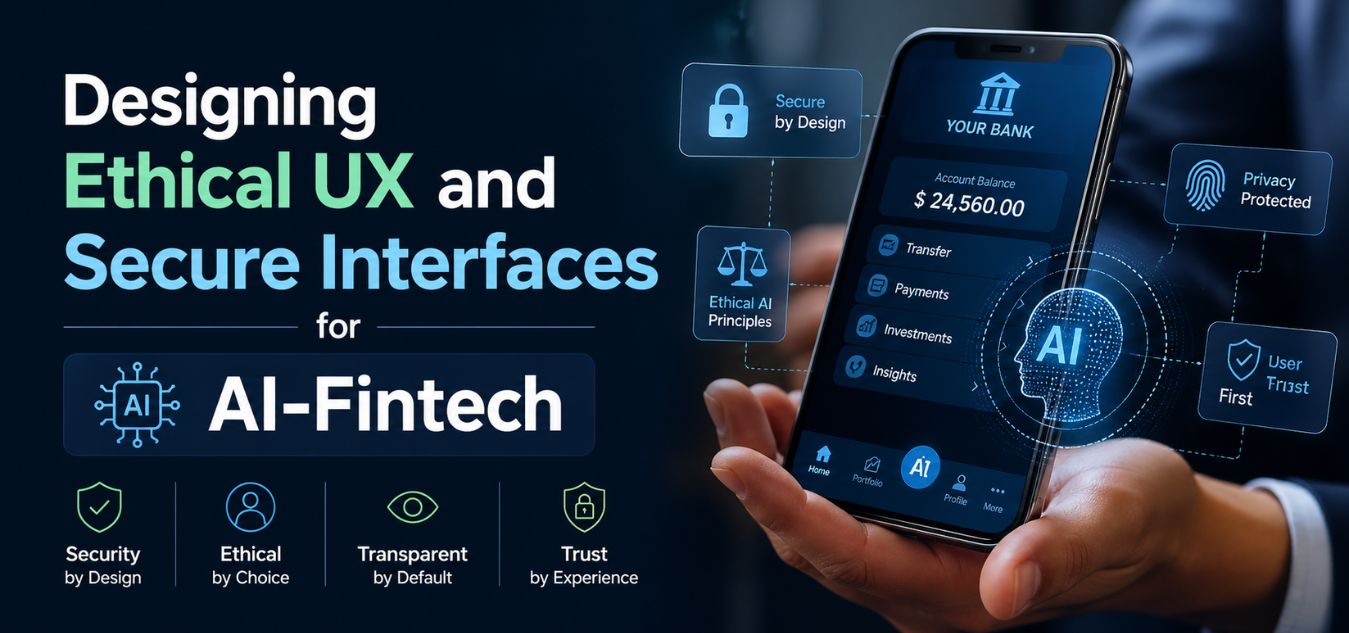
Designing Ethical UX and Secure Interfaces for AI-Fintech
The Trust Deficit in AI-Fintech
The financial technology landscape is evolving rapidly, with AI now seamlessly predicting markets, managing wealth, and automating loans. However, this rapid innovation has created a hidden problem: users are increasingly skeptical of “black-box” algorithms handling their money. If your users do not fundamentally trust your interface, they simply will not connect their bank accounts.
Here is why ethical design must be your top priority:
- The New Frontline: Design is no longer just about aesthetics; it is the absolute core of web security, user trust, and regulatory compliance.
- The Competitive Advantage: At our agency, we have seen firsthand that prioritizing ethical UX and radical transparency naturally rewards you with deep user loyalty.
- Expert Partnership: As we explore how to build secure and engaging AI-fintech platforms below, remember you can always accelerate your project with our Custom UI/UX Design Services.
What is Ethical UX in AI-Fintech?

Ethical UX means prioritizing the user’s best interests over short-term metrics. It is about transparency, fairness, and informed consent.
In the fintech space, dark patterns are unfortunately common. These are design tricks that manipulate users into making accidental financial decisions.
When AI is added to the mix, the stakes get much higher. AI can nudge users toward risky investments or hidden fees based on behavioral data.
Ethical UX actively fights against these manipulative tactics. It ensures that the AI serves the user, not just the platform’s bottom line.
Core Pillars of Ethical Fintech UX:
- Radical Transparency: Always tell the user why an AI made a specific recommendation.
- Friction by Design: Add intentional pauses before irreversible financial actions.
- Clear Consent: Never pre-check boxes for data sharing or AI monitoring.
- Accessibility: Ensure financial tools are usable by people of all abilities.
Are you building an AI trading tool or a budgeting app? Check out our [Fintech Design Portfolio] to see how we implement these pillars in the real world.
Balancing Web Security with Seamless UI

Web security in fintech is non-negotiable. However, heavy security measures often ruin the user experience.
If logging in takes five minutes and six verification steps, users will abandon your app. The goal is to make security feel invisible but impenetrable.
We call this “Security as a Feature, Not a Friction.”
You achieve this through smart UI patterns and contextual security triggers.
Smart Security UI Strategies:
- Biometric Integration: Use FaceID or fingerprint scanning. It is highly secure and takes only a second.
- Contextual MFA: Only ask for Multi-Factor Authentication when an unusual action occurs, like a large transfer.
- Visual Reassurance: Use padlocks, shield icons, and micro-copy like “Bank-Level Encryption” near sensitive buttons.
- Graceful Timeouts: When logging a user out for inactivity, save their progress and explain why they were logged out.
By blending security seamlessly into the design, you protect your users without annoying them. Need a security-first design audit? Contact our UX Strategy Team.
Explaining the “Black Box”: Designing AI Transparency
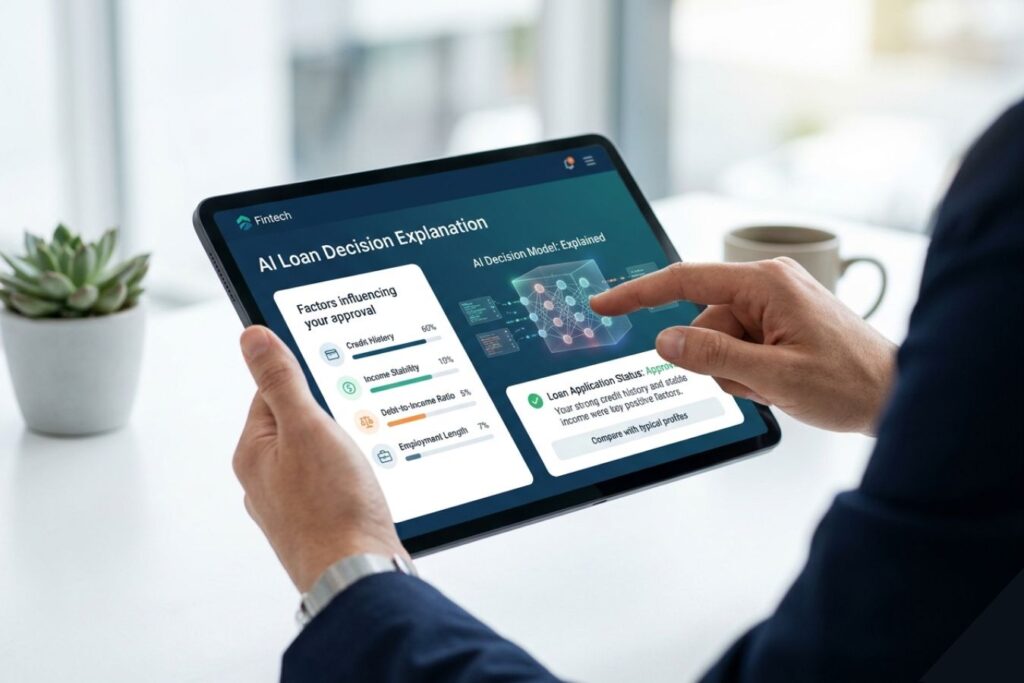
One of the biggest hurdles in AI-fintech is the “black box” problem. Users receive a financial outcome, but they have no idea how the AI reached it.
If an AI denies a user’s loan application, simply saying “Denied” is a terrible UX. It breeds frustration and destroys brand trust.
You must design interfaces that explain AI decisions in plain, human language.
How to Visualize AI Decisions:
- Confidence Scores: Show how confident the AI is in its prediction (e.g., “75% Match”).
- Data Highlights: Highlight the specific data points the AI used to make its decision.
- “Why this?” Tooltips: Add small, clickable info icons next to AI recommendations explaining the logic.
- Human Override: Always provide an easy, obvious way to speak to a human customer support agent.
Transparency turns a scary AI algorithm into a helpful, trusted financial advisor. We specialize in making complex data easy to understand. See our [Data Visualization Case Studies].
Dark Patterns vs. Ethical Patterns
To truly understand ethical UX, we must look at what not to do. Many popular apps still use manipulative design.
Here is a quick reference guide to help your product team stay on the right side of design ethics.
| The Dark Pattern | How it Harms Users | The Ethical Alternative |
| Roach Motel | Making it very easy to subscribe, but almost impossible to cancel an account. | Easy Exit: A simple, one-click cancellation process easily found in the settings. |
| Confirmshaming | Using guilt-tripping copy like “No thanks, I hate saving money.” | Neutral Opt-Out: Simple, respectful language like “No thanks” or “Not right now.” |
| Hidden Costs | Revealing extra fees or AI-service charges only on the final checkout screen. | Upfront Pricing: Showing total costs, including all fees, from the very first interaction. |
| Forced Continuity | Starting a free trial but requiring a credit card and charging silently when it ends. | Trial Alerts: Sending an email and push notification three days before a user is charged. |
Replacing dark patterns with ethical alternatives immediately boosts your E-E-A-T score. It proves to users (and search engines) that you are a trustworthy authority.
Visualizing Data: The Anti-Anxiety Interface
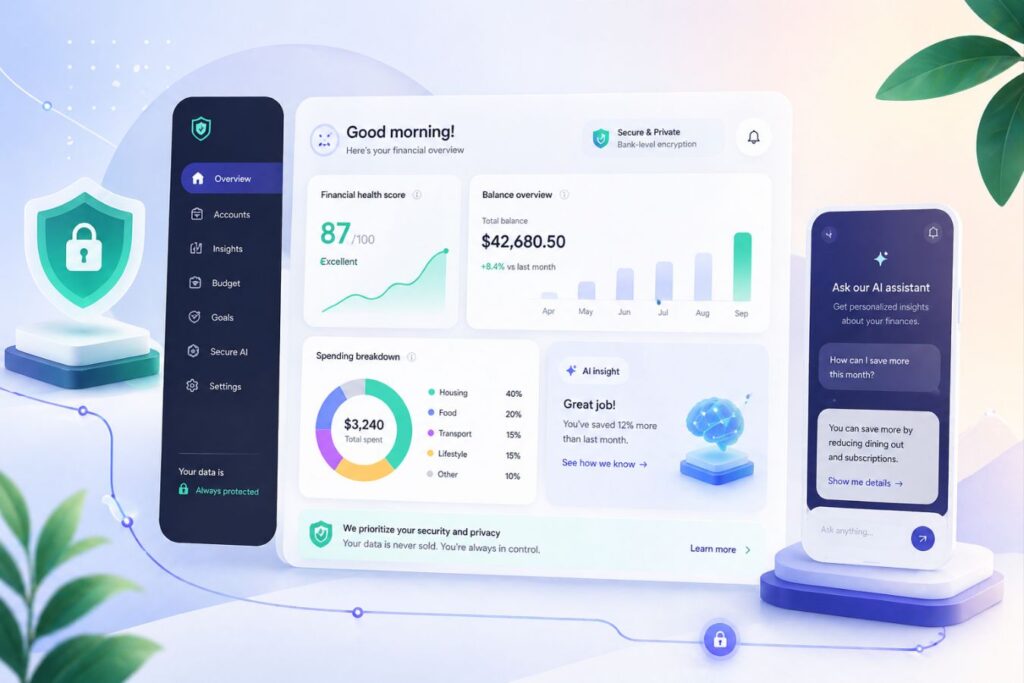
Money is a high-stress topic for most people. AI-driven data can easily overwhelm a user if it is not presented correctly.
A cluttered dashboard full of red numbers and flashing charts causes anxiety. Anxious users make poor financial decisions.
Your interface should act as a calm, guiding hand. Use white space generously to let financial data breathe.
Techniques for Anti-Anxiety Design:
- Color Psychology: Use softer greens and blues. Avoid harsh, alarming reds unless absolutely necessary.
- Progressive Disclosure: Show only the most critical information first. Let users click to see deeper, complex AI data.
- Positive Reinforcement: Celebrate small financial wins, like hitting a savings goal or completing a secure setup.
- Plain Language: Never use banking jargon when simple words will do.
Good design is good business. An interface that reduces anxiety will naturally increase user retention and daily active usage.
Designing for Regulatory Compliance
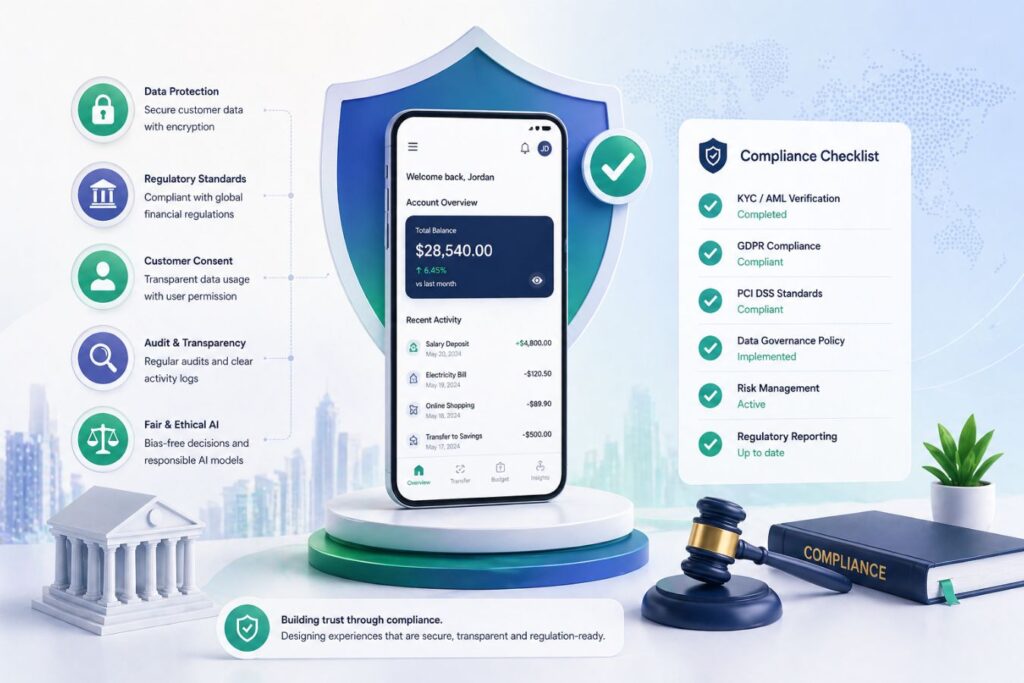
In fintech, you aren’t just designing for the user; you are designing for regulators. Compliance is a major part of your platform’s architecture.
GDPR, CCPA, and upcoming AI regulations require explicit data handling protocols. Your UI must reflect these legal requirements clearly.
If your design fails a compliance audit, your product could be shut down.
Compliance UI Best Practices:
- Granular Cookie Controls: Let users choose exactly what AI-tracking cookies they accept.
- Data Deletion Requests: Provide a clear button for users to “Delete My Data” as required by law.
- Terms of Service Summaries: Do not hide behind 50-page legal documents. Provide bulleted summaries of key terms.
We have years of experience navigating the complex intersection of design and compliance.
Explore more UX/UI work in our Portfolio for deeper insights into compliance-driven design.
The Future of Secure AI-Fintech
The future of finance belongs to platforms that respect their users. AI will only become more powerful, making ethical boundaries even more critical.
If you build trust today, you will secure your market share for tomorrow.
Security and ethics are not constraints; they are the foundation of premium digital products.
Are you ready to audit your platform for ethical UX and rock-solid security?
Our team of expert designers and strategists is ready to help you elevate your brand. Schedule a Free UI/UX Consultation with us today.
Frequently Asked Questions (FAQs)
How does Ethical UX improve user retention in fintech?
Ethical UX builds deep trust by being transparent and respectful of the user’s choices. When users feel safe and in control of their money, they are far less likely to abandon your app for a competitor.
Can high web security coexist with a smooth user experience?
Absolutely. By using modern tools like biometric authentication and contextual security checks, you can protect user data without forcing them through annoying, repetitive login hurdles.
What is the biggest UX mistake AI-fintech companies make?
The biggest mistake is the “Black Box” approach, where the app gives financial advice without explaining how the AI reached that conclusion. Always provide clear, human-readable explanations for AI-driven recommendations.
About the Author